
The Rooftop Kiss
Dark Lies the IslandA hesitant dawn encounter traces desire from imagined opportunity to a tender but unsuccessful kiss and the narrator’s prolonged regret.
increasing Bearing strength in each event
 decreasing
Bearing strength in each eventdecreasingDawn Above Washington Street
A City Still Sleeping
Nearness and hesitation
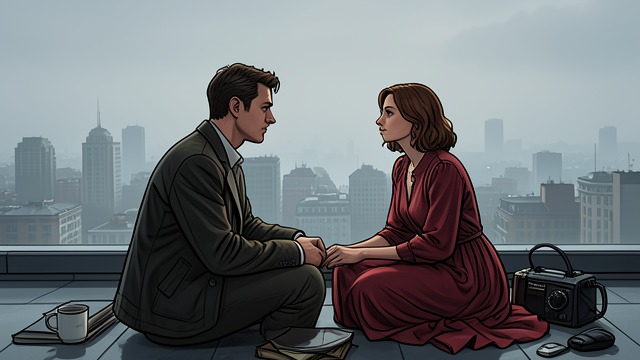
The narrator sits beside a woman on a rooftop after a night of music and dancing. The sleeping city and the pale summer sky make their privacy feel momentarily complete, while his long-standing desire makes the small distance between them seem decisive.
He keeps analyzing her shoulder, her gaze, and the silence for signs that she wants him to act. Instead of trusting the moment, he hides his hands beneath himself and continues talking around what he feels.
Irony as shelter
Their conversation circles nightlife and shared acquaintances, with irony protecting both of them from direct feeling. The narrator recognizes that he has a chance to move closer but repeatedly turns from it into another question.
His inner urgency grows as the city begins to wake. The contrast between his elaborate thoughts and his failure to take a simple step establishes the story’s central tension: desire is vivid, but action remains frightening.
The Hand on the Ledge
A Tentative Touch
Testing the silence
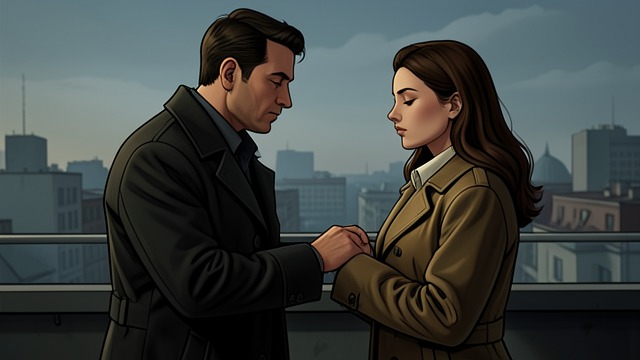
The narrator lets one hand emerge and places his fingers lightly on hers. She does not answer with a gesture, and her even breathing gives him no clear permission or rejection to interpret.
He pulls back only slightly, watching to see whether she withdraws. His thoughts race through the possibility of humiliation, while the stillness of the rooftop makes every hesitation feel exposed.
Words take the place of action
He says aloud that all he has to do is make a move. She tells him he is killing the moment, but she remains beside him rather than leaving.
The exchange briefly breaks their defensive irony without resolving the uncertainty. Her continued presence encourages him, yet neither person has made the emotional risk disappear.
A Kiss That Will Not Take
The Failed Kiss
A direct confession
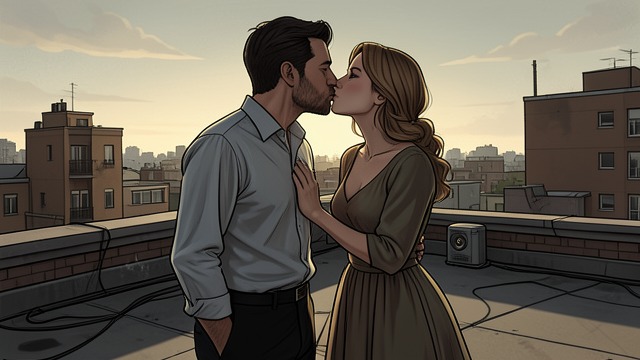
The narrator finally tells her that he likes her, then asks her to turn toward him. Her blush and the smallness of her laugh offer a fragile opening, and he acts before his thoughts can interrupt him again.
They kiss slowly, but the moment does not become the transcendent experience he had imagined. Her light touch on his chest ends it with a gentleness that makes the refusal unmistakable.
The morning afterward
They look away from each other, and the narrator experiences the rejection as a sudden contamination of the morning. She leaves through the window and down the stairs while he stays behind on the ledge.
He imagines himself sitting there for hours, months, and years as the party and the summer recede. The kiss is brief, but its failure becomes a lasting marker of lost youth and the threshold of adult life.
Early one summer morning, around five o’clock
Moments after dawn, before the first kiss
At sunrise, immediately before she leaves
